Saturday, May 24, 2014

Ada Berani??? , tanya TSAM.

4 tahun dulu sebaik kami menang EXCO FAM kami bertemu di Hotel Hilton PJ..Kami bersemangat..Kami susun struktur kerja..kami set scope tugas antara Exco..BERKOBAR KOBAR...

Datang mrat Exco yg pertama SUSUNAN SEDIKIT PUN TAK PAKAI..TAK BINCANG..LIST DTG DAH SIAP..saya TIMBALAN PRESIDEN pengerusi JK BOLASEPAK WANITA...JK PENTING SPT JK KEWANGAN di anggotai orang luar..DI KHABARKAN MASA ITU AKAN ADA IDEA BARU yg akan di bentang Dll lagi..

namun selepas itu satu demi satu idea di tolak..YG PALING SAYA TERKENANG IALAH BAGAIMANA EXCO CADANG SUPAYA ADA SEDIKIT RUANG PEJABAT UTK EXCO DATANG KE WISMA FAM tapi ahkirnya SAYA SEBAGAI TIMBALAN sampai sudah kerusi dan meja pun tak ada..EXCO langsung sampai sekarang ke wisma FAM Mcm orang asing..MRAT JARANG JARANG DI BUAT..sesetengah Jk sampai setahun tak mrat..

MALAH PERNAH KONGRES TAHUNAN TAK DI BUAT DAN BAJET TAHUNAN YG MERUPAKAN BENDA WAJIB TAK DI BENTANG...

JK PASUKAN KEBANGSAAN TAK BERMESYUARAT(saya timbalannya)...malah pernah utk mengikuti Pasukan negara kami terpaksa tambang sendiri..WAKTU TU ADA EXCO MERUNGUT RUNGUT tp lama kelamaan semua diam..SAYA DI GANTUNG KERANA BERSUARA MENEGUR PASUKAN KEBANGSAAN.

MSL YG SAYA PIMPIN DAN MEMBAWA MASUK RM120j tajaan DI TUTUP DAN DI AMBIL ALIH OLEH FAM..bola terus merudum..pemimpin seorang demi seorang di gantung termasuk TMJ dan SHAHIDAN..tiga sasaran(SEA game/AFF/AFC)semua gagal..ranking terus jatuh..beberapa badan gabungan hampir bankrap..

FAN DAN ULTRAS MEMPROTES dll...kini semua cerita negative di "mute" dan Dlm "silent mode"..
Di dendangkan lagu "PENGELAMAN"dll yg tak kena mengena dgn bola.
Pencabar di label dgn segala yg negative..penyokong pencabar di cari failnya..menyemak hutang apa yg belum lunas bagi di bolehkan disqualification dan apa lagi..setiap 4 tahun begitulah ceritanya..

SEKURANG KURANG NYA KALI INI BUAT PERTAMA KALI SEJAK HAMPIR 30 tahun seorang PRESIDEN BADAN GABUNGAN TAMPIL MEMBERI PILIHAN KPD 39 perwakilan...

sudah pun ada tanda tanda "takut","segan","tak berani",jaga"itu",jaga"ini"...SAYA TAK FIKIR KITA RUGI APA APA JIKA PELUANG DI BERI PULA PADA SALAH SEORANG DARI PRESIDEN BADAN GABUNGAN SENDIRI MEMIMPIN FAM...kali ini PRESIDEN PBNJ tampil....ADA BERANI???..

Pendapat orang yang telah gagal.


Baru sekejap baca Utusan ...ini lah contoh situasi bolasepak Msia ..percubaan menggunakan pendapat seseorang yg di ketahui TIDAK LAGI RELEVEN DLM BOLASEPAK HARI INI MALAH TELAH TEWAS DLM PEMILIHAN 2010..dan tidak lagi terlibat dgn mana mana gabungan..
hubungan RAZ dgn orang yg di sokong AMAT DI KETAHUI...dan begitulah cara nya segala galanya di atur..BAGI SAYA KETEPIKAN SOAL HUBUNGAN PERIBADI..LIHAT KEPADA REALITI TANPA PREJUDIS..NILAI BERDASARKAN PRESTASI DEPAN MATA.
.jawatan AFC/FIFA tidak releven kerana itu jawatan setelah kita mewakili jawatan Dlm negara..lagi pun fungsi di AFC DAN FIFA tidak spt Dlm Negara yg di ukur dari sudut kemajuan LIGA dan Pasukan..manakala Di AFC dan Fifa sekadar gabungan..KALAU LAH PENGELAMAN DI AFC DLL JADI UKURAN MAKA BOLA MSIA HARI INI SUDAH JADI JUARA ASIA KERANA MSIA PERNAH JADI PRESIDEN AFC!!!!...
.tolong tengok di bumi nyata..dengar rintihan Penyokong bola dan Rakyat..Jenguk suara hati Pb Negeri dan gabungan..LIHAT dan dgr suara DI kementerian dan MSN..dgr suara Exco yg jauh di belakang 2,3 kerat yg di atas..Cuba selami perasaan STAFF bawahan FAM...mereka nampak..MEREKA rasa...TAPI KITA FAHAM SANGAT...ini lah cara STATUS QUO DI PERTAHAN TAHUN DEMI TAHUN...

Sunday, May 18, 2014

Kepimpinan Futuristik


ONLY THE FUTURE IS MANAGEABLE,
due to three inescapable reasons: 

  • You can’t manage the past. it’s over and done with. You can only change a prior decision by making a new decision sometime from now. 
  • You can’t manage the present. It is a mere nano­second of time as we constantly move from the past to the future.
  • You can only manage “what hasn’t happened yet” — the future. 

Leadership is about steering your organization into that ever-new future. Of course, otherwise-logical people protest that you logically can’t predict the future. They say the future can’t be known. That’s because the future defies purely logical thinking. Instead, it comes logically to the intuitive rather than the linear mind. You can “see” the future.


How Can You “See” the Future?

The “unknown” future can become “known” quite clearly by whole-brained futuristic leaders. They see its wholeness — the big picture — and how it fits together and how trends interact.

Futuristic leaders literally “see” the future and then “map” how to get there. They have a clear idea of what the future will be like. It’s not magic or crystal-ball gazing; they have a genuine feel for relevant trends and their outcome. True leaders are futurists.


Jigsaw Puzzle of the Future

Futurists constantly try to assemble a jigsaw puzzle of the future. You never have all the pieces, so the picture is never complete. In fact, each morning you’ll find some pieces (that you put in the jigsaw as recently as last night) are in the wrong place and you need to re-think things.

Futuristic leaders take minute-to-minute decisions based on that iterative jigsaw puzzle, which they keep at the forefront of their minds. Their never-completed jigsaw puzzle is a constantly changing focus board. No, that is not a contradiction. Christopher Columbus found the New World by using a very speculative map.

Their evolving jigsaw puzzle helps futuristic leaders navigate the uncharted territory of their organization’s future. Their jigsaw puzzle is their “map” to their “new world” — a future which they see most vividly, and which they set out to reach as expeditiously as possible.


Futuristic Leaders Stand in the Future

In the end, it’s not so much what will happen but what you do about it. As noted in an earlier post, futuristic leaders are doers; they achieve things. They are verbs.

Futuristic leaders don’t tip-toe into the future; they stride boldly forward, guided by trends. In fact, they always plant one foot in the future. They regularly stand in the future, take a good look around, scout the best options, and feel comfortable there. They virtually live there.


Futuristic Leaders Are Time Travelers

Futuristic leaders traverse a past-present-future time continuum, constantly shifting perspective along that continuum. They surf across the sweep of time, creating change and making strategic decisions about how best to navigate their organization’s optimal future.

So what’s going on in your organization’s future? 
  • Based on where you are now, what does your future look like?
  • What are you doing about it?
  • What will your organization do about it?
  • How would you like things to be different?
  • How can you make things different?
  • What is your “map” to your new world?

Wednesday, May 14, 2014

Tuesday, May 13, 2014

Bekas MB Terengganu, Ahmad Said keluar UMNO

Bekas MB Terengganu, Ahmad Said keluar UMNO

KUALA LUMPUR: Beberapa jam selepas meletakkan jawatan sebagai Menteri Besar Terengganu pada Isnin, Datuk Seri Ahmad Said telah mengumumkan keluar dari parti UMNO.

Beliau yang juga Ahli Dewan Undangan Negeri (ADUN) Kijal kini berdiri sebagai ADUN bebas.

"Dimaklumkan bahawa saya dengan ini meletakkan jawatan saya dalam parti berkuatkuasa serta-merta.

Saya juga mengisytihar keluar daripada UMNO dan menjadi wakil rakyat bebas bagi DUN Kijal," katanya dalam surat tersebut.

Keluar UMNO Ahmad Said
Surat keluar parti Datuk Seri Ahmad Said yang diemailkan kepada AstroAWANI.

Seorang lagi ADUN dari UMNO, iaitu Ghazali Taib yang merupakan ADUN Ajil juga telah isytihar keluar dari parti tersebut.

Perkembangan itu dimaklumkan oleh Ahmad Said dalam satu email kepada Astro AWANI.

Menteri Besar Terengganu, Datuk Seri Ahmad Said telah meletakkan jawatannya berkuatkuasa Isnin.

UMNO Keluar
Surat keluar parti ADUN Ajil, Ghazali Taib yang diemailkan kepada AstroAWANI.

Beliau digantikan oleh ADUN Seberang Takir, Datuk Ahmad Razif Abd Rahman dalam satu majlis angkat sumpah.

Ahmad Razif mengangkat sumpah sebagai Menteri Besar Terengganu yang baru di hadapan Sultan Terengganu Sultan Mizan Zainal Abidin di Istana Syarqiyyah, Kuala Terengganu malam tadi.

Dengan perkembangan terbaru ini, Barisan Nasional dan Pakatan Rakyat masing-masing menguasai 15 kerusi daripada 32 kerusi DUN Terengganu di mana PAS menguasai 14 kerusi DUN manakala PKR pula satu kerusi.

Baki dua lagi adalah calon bebas.


Read more at: http://www.astroawani.com/news/show/bekas-mb-terengganu-ahmad-said-keluar-umno-35714?cp

Monday, May 12, 2014

Ahmad Said sah letak jawatan MB Terengganu

Ahmad Said sah letak jawatan MB Terengganu
  • Ahmad Said Ahmad Said
1 / 1
KUALA TERENGGANU - [DIKEMASKINI] Setiausaha Agung Umno Datuk Seri Tengku Adnan Tengku Mansor mengesahkan pertukaran Menteri Besar Terengganu selepas satu perjumpaan tertutup dengan beberapa pemimpin Umno negeri di sini hari ini.
  
Beliau bagaimanapun enggan mendedahkan siapa bakal menteri besar baharu Terengganu untuk menggantikan Datuk Seri Ahmad Said, 57.
  
"Saya datang jumpa Adun (Anggota Dewan Undangan Negeri)...seperti dimaklumkan ada pertukaran (Menteri Beasr), saya maklum balas dan mereka terima dan tiada masalah, memang betul ada pertukaran.
  
"Kita tunggu (watikah pelantikan menteri besar baharu) daripada Tuanku Sultan Terengganu (Sultan Mizan Zainal Abidin) dengan pengesahan daripada pihak Istana," katanya kepada kepada pemberita selepas selesai perjumpaan itu.
  
Katanya pertukaran itu tidak akan menimbulkan sebarang masalah kepada Umno di Terengganu kerana pemimpin negeri akur kepada keputusan pucuk pimpinan parti. - Bernama

Wednesday, May 7, 2014

Dua Adun Terengganu Siap Sedia Dilantik Jadi MB

Dua Adun Terengganu Siap Sedia Dilantik Jadi MB

Diterbitkan: Rabu, 7 Mei 2014 11:12 AM
Abdul Razif disebut-sebut sebagai calon Menteri Besar Terengganu yang baharu.
(Ubah saiz teks)
PETALING JAYA: Putrajaya telah meminta dua Ahli Dewan Undangan Negeri (Adun) untuk bersedia menghadapi rombakan yang dipercayai akan berlaku dalam pucuk pimpinan tertinggi di negeri itu.

Sumber berkata, proses pelantikan Menteri Besar baharu di Terengganu sedang dilakukan dan akan berlaku pada bila-bila masa antara 15 dan 18 Mei ini.

Difahamkan dua individu tersebut iaitu Adun Seberang Takir, Datuk Abdul Razif Abdul Rahman, 49, dan Adun Air Putih, Wan Hakim Wan Ahmad, 45 akan dilantik sebagai exco kerajaan negeri.

Detik perubahan di Terengganu harus dilakukan apabila Menteri Besar Datuk Seri Ahmad Said telah menandatangani satu surat persetujuan bahawa beliau akan kekal selama setahun selepas Barisan Nasional menang tipis di negeri itu pada Pilihan Raya Umum Ke-13 (PRU-13) yang lalu.

Perdana Menteri, Datuk Seri Najib Tun Razak telah memberi tempoh selama setahun selepas PRU-13 kerana beliau mahu pemimpin tertinggi di negeri itu berundur secara baik.

Terengganu nyaris tewas pada PRU-13 yang lalu dengan BN hanya memenangi 17 kerusi Dewan Undangan Negeri (DUN) berbanding Pakatan yang memperoleh 15 kerusi.

BN berjaya memenangi separuh daripada lapan kerusi Parlimen di negeri itu.

Sumber dari Putrajaya berkata, Ahmad menandatangani surat persetujuan itu kira-kira dua minggu selepas PRU-13, 5 Mei lalu.

Surat sepanjang dua perenggan itu menyatakan Ahmad akan meletak jawatan sebagai Menteri Besar dan Pengerusi Badan Perhubungan Umno negeri selepas setahun dan pada tarikh yang akan ditentukan oleh Perdana Menteri.

Difahamkan nama Abdul Razif dan Wan Hakim telah dikemukakan kepada Istana.

Tuesday, May 6, 2014

TMJ sahkan pemain JDT dipecat kes curi wang.

TMJ sahkan pemain JDT dipecat kes curi wang
 
TUNKU Mahkota Johor hari ini mengesahkan seorang pemain Johor Darul Takzim (JDT) dipecat berikutan laporan polis berhubung kejadian kecurian wang milik seorang pemain pasukan itu semasa sesi latihan pasukan di padang Seri Gelam pada 1 Mei lepas.
  
Tunku Ismail Sultan Ibrahim yang juga Presiden Persatuan Bolasepak Negeri Johor (PBNJ) berkata, pemain terbabit mengaku mencuri wang daripada seorang lagi pemain JDT ketika sesi latihan pagi enam hari lepas.
  
"Kita telah mengambil keputusan untuk mengeluarkan beliau daripada pasukan hari ini dan saya ingin ucapkan selamat maju jaya kepada beliau," katanya kepada pemberita dan wakil-wakil kelab penyokong bola sepak Johor.
  
Menurutnya, walaupun PBNJ mengambil keputusan memecat pemain terbabit, tetapi pada masa yang sama menyerahkan kes itu untuk siasatan polis.
  
Pemain pertahanan berusia 26 tahun yang mendakwa wangnya dicuri membuat laporan polis pada 1.37 petang tadi di Ibu Pejabat Polis Johor Baharu Selatan.

Menurut salinan laporan polis yang dibuat pemain terbabit, beliau telah meletakkan begnya yang mengandungi RM500 di dalam beg persalinan dan mendapatinya hilang apabila selesai sesi latihan itu.
  
Beliau mengadu kepada penjaga pasukan dan mereka telah meneliti kandungan kamera litar tertutup dan mengenal pasti pemain yang bertanggungjawab melakukan perbuatan terbabit.
  
Berikutan rakaman kamera litar tertutup itu, penjaga pasukan JDT itu itu menemui pemain terbabit dan mengakui perbuatannya itu.
  
Laporan polis itu turut menyatakan kes terbabit sedang disiasat di bawah Seksyen 380 Kanun Keseksaan.
  
Sementara itu, Tunku Ismail ditanya tentang perlawanan separuh akhir Piala FA di antara JDT dengan Pahang semalam, berkata, tahap pengadilan adalah yang terburuk pernah disaksikannya seumur hidup.

"Ia adalah yang terburuk disaksikan saya seumur hidup," katanya tentang mutu pengadilan perlawanan semalam yang berkesudahan seri 1-1.
  
Katanya, mutu pengadilan itu yang disifatkannya sebagai terburuk itu turut membuktikan kelemahan pengurusan Persatuan Bolasepak Malaysia (FAM) dan kegagalan mereka meningkatkan tahap pengadilan bola sepak negara ini.
  
Beliau mengulangi kesediaannya mengeluarkan peruntukan kewangan daripada poketnya sendiri, jika diminta oleh FAM, untuk meningkatkan taraf dan kualiti pengadilan bola sepak di negara ini termasuk mendirikan akademi pengadil.
  
"Saya tidak kisah jika kalah atau seri tetapi ia mestilah adil, tetapi perlawanan semalam ia seperti saya telah dirompak," katanya.
  
JDT akan bertandang ke Stadium Darul Makmur, Kuantan untuk separuh akhir kedua pada 30 Mei depan.  - Bernama

Saturday, May 3, 2014

Juadah Tradisi Rakyat Kelate.

Di Hotel Perdana - pulut ike kering, pisang rebus, ubi kayu rebus, cek mek, tepung pelita........
gambar dari fb Hotel Perdana.

Wednesday, April 30, 2014

Esok Cuti


Nak duduk rumah.
Nak baca surat khabar.
Nak cuci kereta.
Nak makan.
nak tidur.
Selamat Hari Pekerja.

Friday, April 25, 2014

Sama-sama berasal dari Kg.Badak, Bachok.

 Dato Pa dan SAC Dato Dr. Abd. Rahman, Pengarah BAKA Bukit Aman. Rumah orang tua mereka berjiran di Kg. Badak, Bachok. Kampung Pak Man juga.

#gambar dari fb Dato' Pa.

Thursday, April 17, 2014

Bawang Merah.


Seorang doktor mengunjungi sebuah keluarga petani dan mendapati keluarga tersebut berada dalam keadaan sihat sedangkan jiran2 mereka menderita selsema dan sakit bawaan bakteria yang lain seperti demam, cirit birit, kudis dan lain2. Doktor bertanya petani bagaimana keluarga tersebut tetap sihat sedangkan jiran2 mereka menderita sakit. Si isteri petani menjawab mudah aje, letakkan bawang merah yang telah dikupas dalam piring disetiap ruang rumah. Doktor amat tertarik dan meminta untuk melihatnya dibawah mikroskop lalu mendapati virus selsema dan bakteria2 lain dibawang merah tersebut. Bawang merah ini berfungsi menyerap semua virus dan bakteria diruang sekitarnya dan secara tidak langsung dapat mengelakkan keluarga petani dijangkiti penyakit bawaan virus dan bakteria.

Kes kedua ialah disebuah kedai gunting rambut yang banyak dikunjungi pelanggan. Tauke kedai mendapati ramai pekerjanya diserang selsema kerana sesetengah pelanggannya sedang selsema ketika mengunjungi kedainya. Tauke pun meletakkan semangkuk bawang merah yang telah dikupas di beberapa penjuru kedainya dan hasilnya pekerja2 beliau tidak lagi diserang selsema.

Kes ketiga seorang yang terkena pneumonia menemukan artikel yang mengatakan untuk memotong kedua hujung sebiji bawang kemudian dicucuk dengan garpu pada salah satu hujungnya. Letakkan bawang tersebut disebuah bekas kosong dan tempatkan dibilik pesakit. Keesokannya didapati bawang merah menjadi hitam kerana kuman2 seakan tertarik padanya. Bawang merah yang berfungsi sebagai magnet yang menarik kuman2 padanya menjadi hitam dan rosak sebaliknya pesakit semakin bertambah baik.

Bawang merah dan bawang putih mempunyai kekuatan antibakteria dan antiseptik yang amat menguntungkan manusia. Bawang merah boleh menjadi amat bermanafaat jika digunakan dengan cara yang betul, sebaliknya ianya amat beracun jika dibiarkan semalaman setelah dikupas. Ini kerana ianya umpama magnet yang menarik kuman hingga boleh menyebabkan jangkitan kuman pada paru2, sakit perut, keracunan makanan, cirit birit dan sebagainya.

Satu kajian keatas haiwan mendapati anjing tidak boleh memakan bawang merah kerana perut anjing tidak dapat mengolah bawang merah. Harap diingat, adalah berbahaya untuk mengiris bawang merah dan menggunakannya untuk memasak pada hari berikutnya.

Dari papazola : nak sihat senang, nak sakit lagi senang. Gunakan pengetahuan anda sebaiknya dan mari berkongsi supaya bertambah berkat dari Allah s.w.t.

Sunday, April 13, 2014

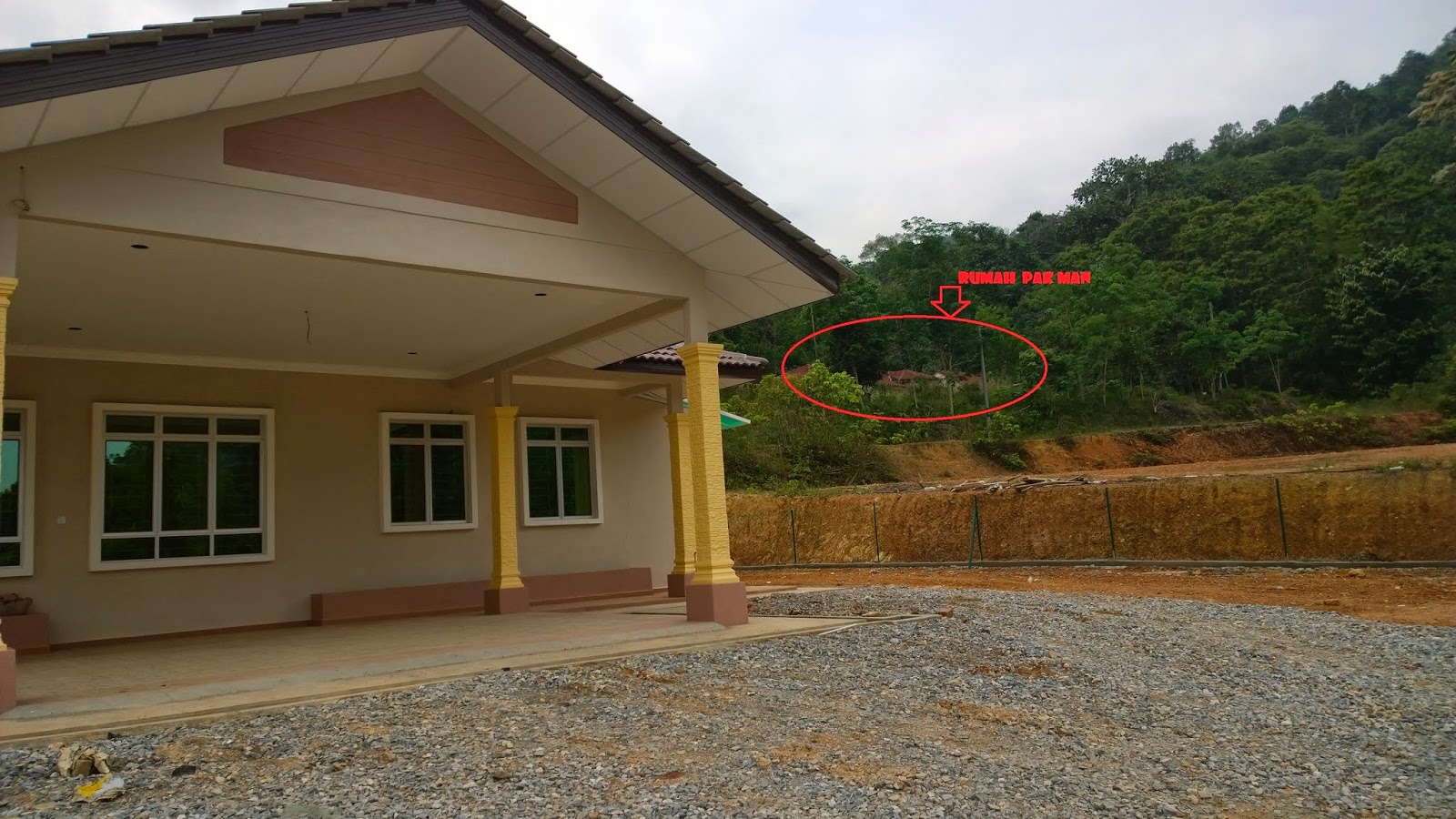
Akhirnya kami 'berjiran'.

Akhirnya ada juga orang buat rumah dekat dengan rumah Pak Man. Jadi tak lah kami terkontang-kanting sorang-sorang dalam hutan ini.( Rumah kami dalam bulatan merah itu).

Friday, April 4, 2014

Rich Malaysia, Poor Malaysians? - SPEECH BY TENGKU RAZALEIGH HAMZAH

Rich Malaysia, Poor Malaysians?

I am honoured at having been invited by Encik Anas Alam Faizli to launch his book, Rich Malaysia, Poor Malaysians, a collection of essays reflecting his thoughts on energy, the economy and education of our beloved country. I applaud Anas for his intellectual discipline to pursue writing which demands mental toughness, quiet tenacity and absolute patience. Indeed, he deserves our admiration.

2. He deserves our respect given that Malaysians are notoriously apathetic to reading, let alone writing. I respectfully submit that we do not write enough, both fiction and otherwise in comparison to, say, our sprawling archipelagic neighbour to the south. It is in this context that our author deserves our commendation – my commendation in particular – for a task well done, even though the themes are serious and difficult. Well done, Anas.

3. Having skimmed through the book, I must admit that I have more than just a passing interest in it; and at least for two reasons. I am always interested in writings on the subject of energy, be they articles for lay reading or academic treatises. I feel especially close when oil and petroleum are discussed. This is because of my task previously to see through the legislation of the Petroleum Development Act, 1974 [PDA]; the negotiation of the Production Sharing Contracts with oil majors whose roles were redefined as contractors to the national oil company in the post-PDA era; and, establishing and developing Petronas into a professionally reputable and internationally respectable national oil company.

4. Secondly, having been schooled in economics, I follow its development keenly, both at the national and international levels. This is strengthened further by my having once been the Minister of Finance charged with the financial and economic management of the country. And of course, given the collective responsibility of the Cabinet, national policies on such subjects as education interest me greatly.

5. Let us reflect, for a moment, upon the situation regarding the supply and consumption of petroleum in the country and the downstream role of Petronas in the retailing of this essential and strategic product. Given our continuous inability to guide the country out of the middle income trap into the high income bracket, we have been using, for long spells, petroleum subsidization to solve the problem of its affordability by ordinary people in the lower strata of the economic chain. While the subsidising of consumer goods is not the most efficient of ways in managing the high cost of living, it is fairly understandable if the government extends a helping hand to the small man in that manner. What is sinful and cannot be forgiven is the ease with which the power that be had been dishing out subsidies to such entities as the national power supplier, the independent power producers and some other non-power outfits. As has been pointed out by Anas, since 1997 this subsidy has amounted to RM136.5 billion. The sad part is that while these power producers continue to enjoy subsidised fuel price, petroleum subsidy to the consumers – which purportedly cost the government RM14 billion in 2011 – was partly discontinued recently.

6. It is glaringly obvious that the government has been treating Petronas as a cash cow. Anas continues to point out that over 37 years from 1974 – 2011, the government had been paid some RM529 billion in dividends, taxes, petroleum proceeds and export duties from the national oil company. The reliance on Petronas to help outfits with strong linkages to the government out of financial trouble has been going on from as far back as 1985. In that year it rescued Bank Bumiputera with a RM2.5 billion bailout and again in 1991 when it coughed up another RM1 billion. In 1997, Petronas had to rescue the financially ailing Konsortium Perkapalan Berhad for RM2 billion. The national oil company was also made to underwrite the construction of the Twin Towers in the heart of the KL golden triangle for RM6 billion and the building of the extravagant Putrajaya for RM22 billion. In all, more than a half trillion ringgit have been spent. This amount could have been used more productively to fund a national pension programme for Malaysians as has been done by a certain Scandinavian country.

7. This extravagance that had been forced on to Petronas has also deprived the company from the much needed cash build-up for reinvestment which would ensure its business sustainability. Given the finite nature of hydrocarbon as a resource, it is important for Petronas to look further afield at investments in businesses outside of oil and gas. Looked at from this perspective, it is all the more critical for the corporation to have a strong cash reserve for reinvestment purposes. It was this need for prudence that had led Tun Razak, the Prime Minister of the day, to impress upon me the need to ensure that Petronas would enjoy parity with such multinational companies as the once much touted seven sisters, two of which ultimately became its contractors. Today Petronas is at par with the oil majors and it is ranked as one of Fortune 500’s largest and most profitable oil and gas companies. But sadly, it is being abused and treated as the piggy bank whenever the government needs cash in a hurry.

8. Ladies and gentlemen, why is this so? Why is there a discrepancy between what was visualised by the founding fathers of Petronas and what it has turned out to be 40 years on; that is, as a banker of sorts to the government. The truth is that there had been consistent political interference and this had affected Petronas, even though it is a professionally well run corporation. There is a blurring of lines demarcating the party in power and government, and by extension, the party supremo and the head of government. Cynics would contend that it was done on purpose to facilitate the development of politics of patronage. This, in turn, led to the growth of crony capitalism.

9. This state of affairs is brought about by the collusion of politicians, who habitually line their pockets, and business people, who have come to be known as cronies, who are not competitive without favours. It is this cosy relationship and unholy alliance that has brought into focus the activity described by economists as rent-seeking. It is, if you will, an easy way of making money that is made possible by political connections, without having to take part in healthy, and fair open competitions. Sometimes money is made through outright corruption, poor regulation and the transfer of public assets, through privatisation exercises, at bargain prices.

10. Making fortunes in this manner seems to be fashionable now that the power-that-be has found it most profitable to issue licences, permits and contracts to their cronies. Rent-seekers have never had it so good since the mid 1980s. For instance, soaring property prices have brought fabulous riches to developers who could rely on swift approvals for projects. Some privatisation exercise have afforded opportunities for businessmen to latch on to monopolies or acquire assets cheaply. The link between politics and wealth is quite plain for us to see. For instance, many from the rank of the wealthy are members or strong supporters of the political party forming the government of the day. For the man in the street, the wish is for rent-seeking practice to be stopped as it would lead to cartels and monopolies. Rent-seeking also takes the easy and lazy way in the conduct of business where the tendency is to grab a bigger slice of the pie rather than making that pie bigger. The customer suffers in the end.

11. The entrenchment of rent-seeking and patronage system into the fabric of Malaysian life begs the question – how did this come to pass? Much as this sounds like a blame game and much as this is distasteful to swallow, the answer lies in the New Economic Policy; or rather, the NEP that had gone wrong in its implementation. Please make no mistake about the NEP; the philosophy and thought underpinning this piece of social engineering programme is just and noble. However, its implementation went haywire and wrong because of the practice of patronage that had led, in the first place, to cronyism and rent-seeking that we had just spoken about. As a result, goals set out by the policy were not met in the specified timeframe. In an effort to remedy the situation, a so-called trickle-down plan was put in train. The plan was badly thought through and represented more of a knee-jerk reaction in the desperate bid to show that the NEP was not a failure.

12. In essence, the plan called for the empowerment and enrichment of a select few who would be supported to achieve success as entrepreneurs and asset owners. The plan was supposed to have created a multiplier effect that would trickle down to benefit the community financially.  The plan failed. In the words of Anas “the trickle-down effect did not and does not work … In fact, it has perpetuated high inequality amongst Malaysians.” To my mind, the plan helped to create a fertile breeding ground for patronage which had led to cronyism and rent-seeking practice stated earlier. Worse, it created ethnic rivalry which is clearly manifested in the presence of parallel economic and social systems in our midst. Observe, for instance, different ethnic groups competing in the business of providing post-secondary education. The same could be said regarding the ownership of financial institutions or commercial establishments, the latter being physically represented by the mushrooming of oversized and oversupplied shopping centres.

13. This inter-ethnic dichotomy is no more than a duplication of effort which result in the inefficient application of resources. It is worsened by the economic disparity that continues to be persistently reflected along racial line, notwithstanding the efforts made to blur and wipe it out. As explained by Anas, the bottom 40 per cent of Malaysia in economic terms is still made up of bumiputera households. Transpose this against the notion that about 90 per cent of their incomes are made up of wages and salaries which are hardly commensurate with the relatively more rapid increases in living costs, this problem takes on a much darker hue. As an illustration of how low Malaysian income generally is, it is worthwhile noting that the EPF had been known to report that about 79 per cent of its contributors earn RM3,000 or less a month. This reality becomes more significant when we realise that disposable income contributes much to purchasing power, especially among the relatively poor as opposed to the wealthy where purchasing power is additionally sourced from assets other than salaries and wages.  A report on the national human development goes further to say that the “Chinese has a higher purchasing power compared to other ethnic groups…” More problematic and easily a potential source of politico-economic problem is the assertion by the report that there is “homogeneity in the purchasing power gap.” It asserts that the super-rich, regardless of ethnicity, has about 18 to 20 times more purchasing power.

14. Purchasing power has a graver ramification from the standpoint of economic wellbeing. This has to do with the reality that a person who enjoys a high income is not necessarily guaranteed a better quality of life. Neither does the effort to improve the quality of life through high income mean much if the cost of living rises rampantly. Again, an observation by Anas is very illuminating here. He contends that a graduate who entered the job market for the first time, say, in 1978 on a monthly salary of RM1,000 could afford a lower-end car of RM12,400 or 12 months’ salary and take out a mortgage, perhaps, on a RM62,000 house in a fairly upscale Kuala Lumpur suburb. Today, a fresh entrant into the labour market on a monthly salary of RM2,500, which is two and half times higher than his earlier counterpart, would find a roughly similar car costing him RM178,000,  roughly 71 months of his salary. A house outside the Greater Kelang Valley area, in Nilai for example, would set him back by RM350,000. This situation could get worse in all probability.

15. Ladies and gentlemen, the challenge before us is to mitigate the socio-political issues and problems to a minimum. This will ensure that they do not become a part of our political culture and, by extension, our way of life. We must have the will to stop patronage and cronyism. In this way rent-seekers would be cut off. But herein lies the problem. Political leaders are loath to upsetting the apple cart and disturb their cosy symbiosis with rent-seeking cronies.  More often than not, these are the people whom they rely upon for political funds in their effort to continue to latch on to power.

16. What then could be done given this near-checkmate type of a situation? I say pressure must be brought to bear and it must be made known that we will not tolerate any more politics that is less than ethical. We must clearly and loudly make it known that politics must be practised with a high level of integrity. No, politics is not dirty but its practitioners, more often than not, are. In the longer run and in order to ensure that ethical politics of impeccable integrity is practised, we must overhaul our education system. We need to shift our education paradigm from a system that emphasises regurgitating what is learnt by rote to amass distinctions to one that puts a premium on logical and critical thinking in which source as well as general reading is a major activity in providing the primary material. We must revisit our educational philosophy in order that we may give equal importance to classroom and off-classroom activities in educating the young Malaysian into a potential leader material for the public or private domains. Of course, this is a huge and important subject that needs proper addressing at, perhaps, another forum.

17. Ladies and gentlemen, in the last several minutes I have shared with you my thoughts on the subjects addressed by Anas in his book. I hope it has generated enough interest to trigger off your critical thoughts on the subjects or other related subjects. In the process it is hoped that some of you will go a step further to put pen to paper as Anas had done. On that note, I take this opportunity to congratulate the author for making the book available to the public which I have much pleasure in introducing.  Thank you and I wish you a pleasant day ahead.

SPEECH BY TENGKU RAZALEIGH HAMZAH
OFFICIATING THE LAUNCHING OF THE BOOK “RICH MALAYSIA, POOR MALAYSIANS” BY ANAS ALAM FAIZLI

On Thursday, 3.4.14 At 8.00 P.M. at Sultan Sulaiman Club, Kg. Baru, Kuala Lumpur